Devon · EX12
Drone services in Seaton
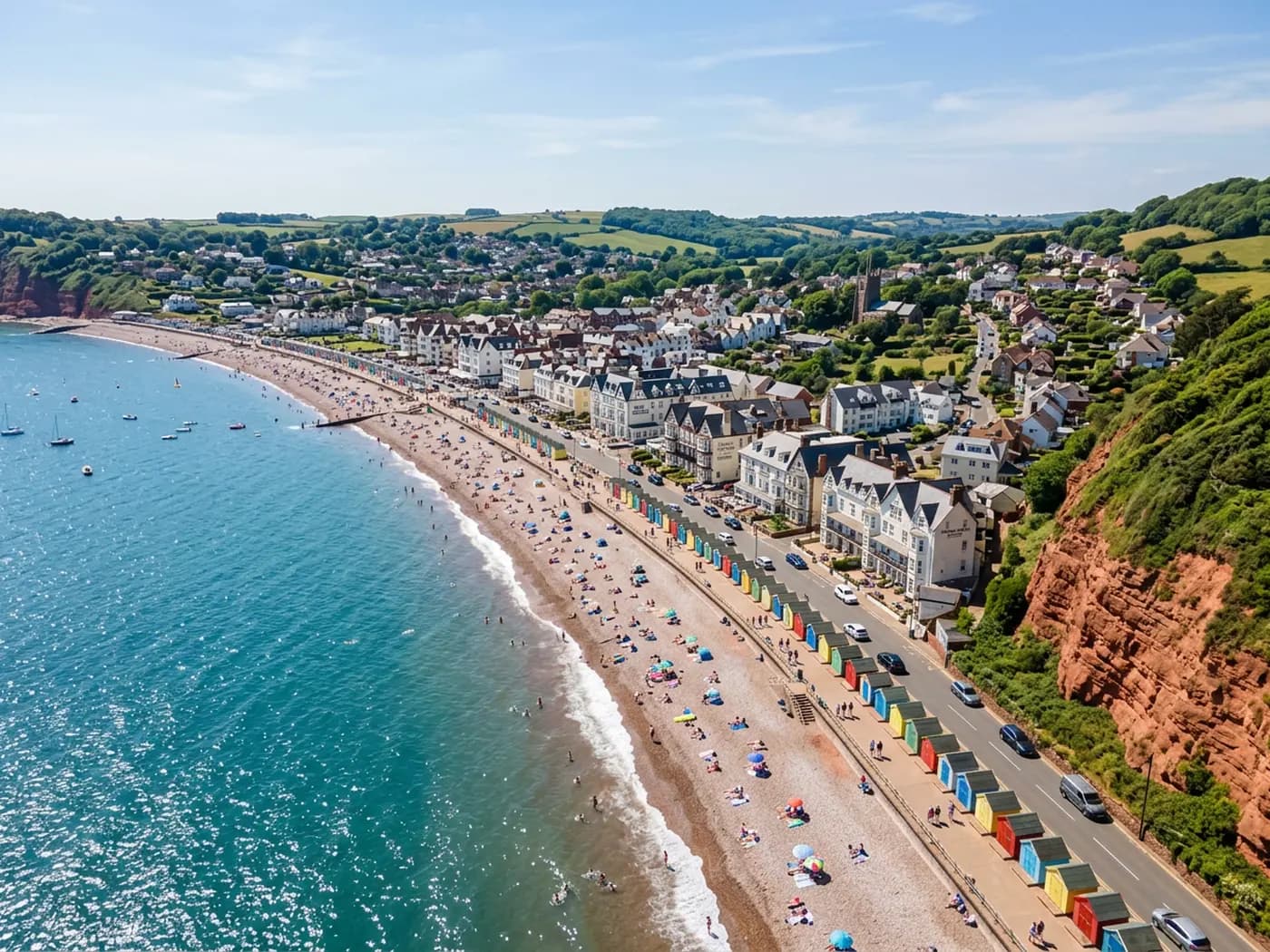
Seafront terraces and a large bungalow stock a few metres from a shingle beach, which makes gale-driven rain and shallow pitches the recurring theme.
The front row really is on the front
There is very little between the beach and the first rank of properties here, so salt spray and gale-driven rain are not occasional events but the defining maintenance condition. Fixings corrode, rendered parapets take a beating, and anything metal on an exposed elevation ages at a rate that surprises owners moving from inland.
The Victorian and Edwardian seafront terraces carry that load on complicated roofs with parapets and hidden gutters, where a failure fills and overflows inwards. As in every town built this way, the first sign is a stain on a top floor ceiling rather than anything you can see from the promenade.
Rendered elevations behind the parapets are the other recurring subject. Salt and driving rain get into render at a crack, freeze, and take a patch off, and the patch is always in the place hardest to see from the pavement.
Bungalows, shallow pitches and wind pressure
Behind the front, the slopes carry a large stock of post-war bungalows, and shallow pitches shed water poorly once wind pressure gets under the covering. Water is driven back up under a tile in conditions where a steeper roof would be perfectly fine.
Flat felt and single-ply on bungalow extensions is the other half of that. Ponding, a splitting seam, a silted outlet: none of it is visible from the garden and all of it is obvious from above.
Holiday flats and chalets add a third category, often owned at a distance and inspected by nobody between seasons, which is exactly the pattern that lets a small problem become a large one.
Conservatories and glazed extensions are common on the bungalow stock too, and the junction between a conservatory roof and the house wall is one of the more reliable sources of water ingress anywhere in the country.
The Axe, the wetlands and the tramway
East of the town the Axe estuary and its marshes are a wetland reserve, and to the west sits the Undercliff landslip woodland. Both put constraints on where an aircraft can sensibly work, and both are planned around rather than argued with.
The tramway and the estuary also generate a certain amount of picture work, particularly from hospitality and holiday businesses that trade on the setting and cannot show it from ground level.
After a storm, and what actually helps
This stretch takes damage in most winters, and the enquiries arrive in clusters within a few days of a named storm. What helps an insurer is a dated record of the damage while it is fresh, close enough to show the failure and wide enough to place it on the building.
The temptation is to wait for a nice day. It is usually the wrong call, because the value of the evidence falls as the weeks pass and a plain photograph taken promptly outweighs a beautiful one taken late.
There is a quieter version of the same job worth mentioning: a survey before the winter rather than after it. Establishing that ridge fixings and flashings are sound in October is a great deal cheaper than establishing in February that they were not.
Where to go next
Booking something in Seaton
Behind the survey
What people in Seaton are actually buying
CAA registered operator
Operator ID and Flyer ID both held and current with the Civil Aviation Authority, which is the baseline for flying commercially in UK airspace.
A2 Certificate of Competency
The A2 CofC, which allows closer flying to buildings and to people not involved in the flight than the basic qualification does. It does not extend to flying over crowds, and nothing on this site suggests it might.
DJI Mavic 4 Pro
A 100 megapixel Hasselblad camera and 6K video. Enough resolution that one flight can produce both a photograph fit to print and a frame close enough to read a hairline crack.
DJI Mavic 2 Enterprise Advanced
A 640 by 512 radiometric thermal camera for the jobs where the answer is a temperature difference rather than something visible: trapped moisture, heat leaving a building, a warm shape on cold ground.
Insured with Coverdrone
Full commercial cover, and the certificate goes to anyone who needs to see it before a visit. Managing agents and site managers usually do, and asking is sensible rather than awkward.
A construction background
The person flying has worked in construction, which is why the report says what a defect is and where it sits rather than only that something looks wrong in a photograph.
Fixed price, agreed first
The price is set before the visit and travel inside the coverage area is part of it. No hourly creep, no mileage added afterwards.
Written report within 48 hours
Where the job needs a report, it lands within 48 hours of the flight. Photograph-only jobs have their delivery date agreed at booking instead.
Nearby
Also covered around Seaton
- AxminsterA hilltop town open to wind from every quarter, with former mill and factory buildings that bring large-span roofs into an otherwise domestic mix.
- SidmouthRegency roofscapes in a steep valley, where turbulent wind off the sea and lead-lined parapet gutters make this one of the more technical towns here.
- Lyme RegisA harbour town built into an actively moving landslip coast, where ground movement shows up in ridge lines and flashings before it shows anywhere else.
- HonitonA long Georgian high street under the Blackdowns, where sitting fog keeps roofs wet and a uniform frontage hides complicated roofwork behind it.
See which one fits
Tell us what you need in Seaton
Send the address and what is worrying you. Sam Hembury will come back with a fixed price and the next slot that suits the weather.